Ingredients
Equipment
Method
- Mix the all-purpose flour and baking powder in a large bowl. Gradually add warm water while stirring with chopsticks or a wooden spoon. Once the mixture comes together, knead by hand or with a stand mixer on medium speed for about 10 minutes. The dough should become smooth and fairly stiff-not soft like steamed bun dough. If it feels excessively dry, add 5–10 g more water. Finish by kneading by hand until the surface is completely smooth. Cover with a damp towel and rest for 20 minutes.
- After the initial rest, knead the dough again for 3–5 minutes until it becomes even smoother and more elastic. This second kneading develops the gluten structure necessary for those signature layers. Cover the dough and let it relax at room temperature for 1 hour. This extended rest is crucial for achieving the paper-thin sheets in the next steps.
- Transfer the rested dough to a clean work surface. Divide it into 3–4 equal portions (smaller pieces are much easier to roll by hand). Keep the unused portions covered with plastic wrap or a damp towel to prevent them from drying out.
- Take one portion and roll it into a long strip using your hands. Then use a rolling pin to roll it out as long and thin as humanly possible-aim for almost 2 meters long and paper-thin. You should be able to see your work surface or table pattern through the dough. Keep the width narrow, about 15–18 cm. Pull and stretch gently while rolling to achieve maximum length and thinness.
- Brush the entire surface of the thin dough sheet with a thin, even layer of melted lard using a pastry brush. Starting from one end, begin rolling it up loosely like a Swiss roll, rolling from left to right to create distinct layers. When you reach approximately halfway through the sheet, stop rolling.
- Using a special Roujiamo wire cutter or a very sharp knife, cut the remaining unrolled portion into extremely fine strands resembling thin noodles. This “wire-drawing” technique creates additional layers and texture. Ensure every strand gets coated with a little lard for optimal crispiness.
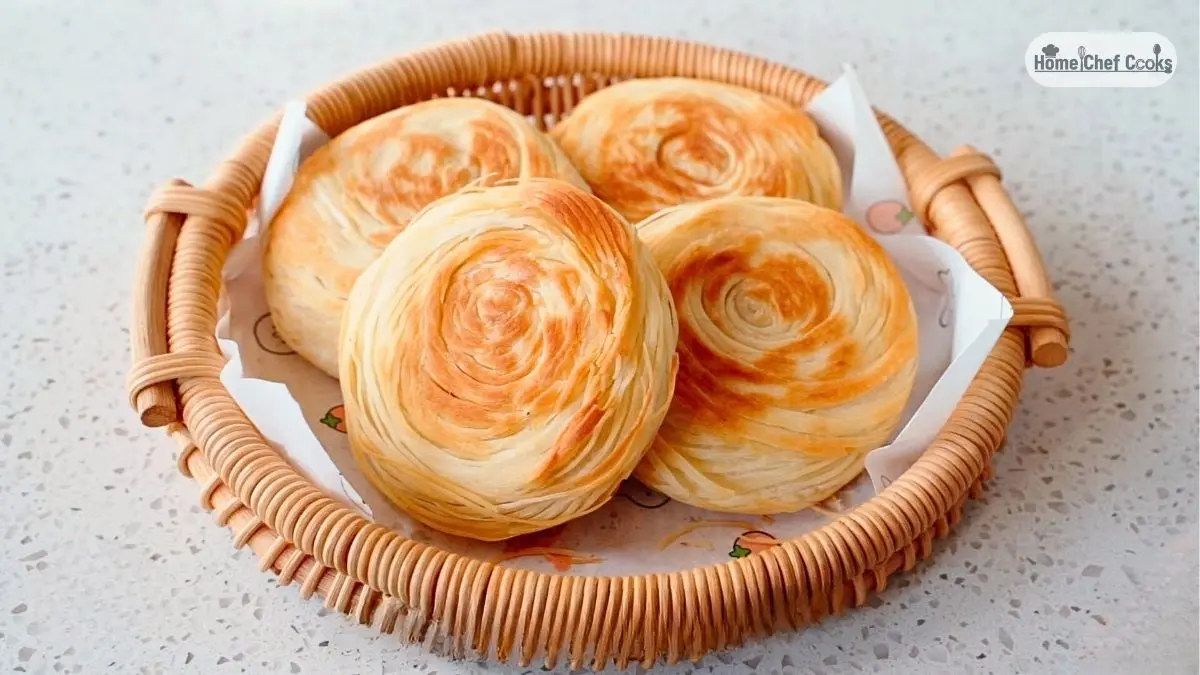
- Continue rolling the strand-covered portion until everything is rolled into one long rope. The outside should be completely wrapped in those fine strands, creating a beautiful spiral pattern. The strands will create pockets of air and flakiness during cooking.
- Pinch and twist the rolled rope while simultaneously squeezing with one hand and rotating with the other. The roll will naturally break into two cone-shaped pieces. Cover these pieces and let them relax for 10–15 minutes. This rest allows the gluten to relax, making them easier to flatten.
- Gently squash each cone from the top, pressing the pointed end toward the center to create a disc. Flip it over-this step is important to keep the spiral pattern intact on top. Roll each piece into a round cake about 1–1.5 cm thick. Don’t worry about achieving perfect circles; rustic shapes are authentic.
- Heat an ungreased or very lightly oiled flat pan or electric griddle over medium-low heat. Place the rougamo bread rounds pattern-side down. Cook until lightly golden on the bottom, then flip carefully. Cook the other side until both surfaces develop some color and the cake starts to puff slightly. Avoid over-browning at this stage, as the bread will finish in the oven.
- Preheat your oven to 230°C (450°F) with both top and bottom heat for at least 15–20 minutes. Transfer the pan-fried buns to a baking tray and bake in the middle rack for 10–15 minutes. Home ovens typically require 12–15 minutes, while professional ovens only need 3–5 minutes at 240°C. The chinese rougamo bread will puff up dramatically and become incredibly crispy on the outside while remaining soft and layered inside.
- Allow the baked rougamo bread to cool for 3–5 minutes. Split each bun open horizontally but don’t cut all the way through-leave one edge intact to create a pocket. Stuff generously with chopped braised pork belly, diced green bell pepper, fresh cilantro, and drizzle with a little braising sauce for extra moisture and flavor.
Video
Notes
Store unfilled rougamo bread in an airtight container at room temperature for up to 2 days, or freeze for up to 1 month. Reheat in a 200°C oven for 5–7 minutes to restore crispiness-never microwave, as this makes the bread chewy and destroys the delicate layers.