
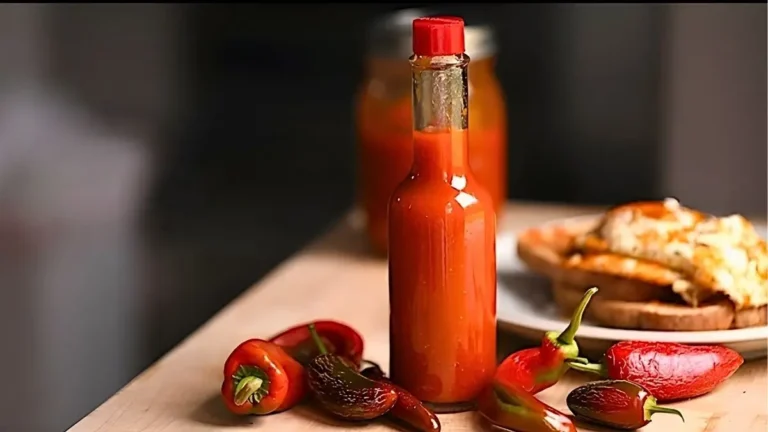

What is Cooked Hot Sauce and How Does It Taste?
Cooked hot sauce is a pepper-based condiment where fresh chiles are blended with vinegar and salt, then simmered to develop deeper, more complex flavors. The cooking process caramelizes natural sugars in the peppers while mellowing their raw bite, creating a smoother, more rounded heat profile.
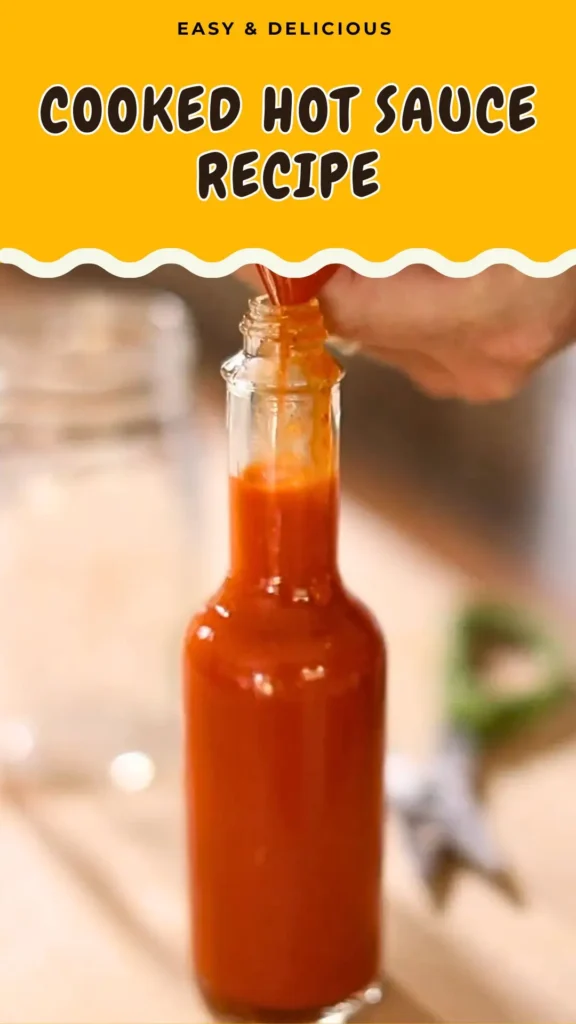
This homemade hot sauce tastes brighter and fresher than commercial varieties, with a vibrant pepper flavor that shines through the tangy vinegar base. The texture is silky-smooth when properly blended, coating your food rather than running off like watery versions.
Expect a balanced combination of heat, acidity, and savory depth-the kind of flavor that enhances everything from eggs to tacos without overwhelming the dish.
Cooked Hot Sauce Recipe Ingredients
- 1 pound (about 450g) fresh red hot peppers (such as jalapeños, serranos, and Hatch chiles, stems removed after soaking)
- 1-2 tablespoons kosher salt or sea salt (start with 1 tablespoon and adjust to taste)
- 2-3 cups plain distilled white vinegar (enough to fully cover the peppers; approximately 5% acidity)
Kitchen Utensils
- Kitchen gloves (highly recommended for handling hot peppers)
- Large mason jar or mixing bowl
- Sharp knife and cutting board
- High-speed blender
- Small saucepan or pot
- Wooden spoon for stirring
- Clean bottles or jars for storage
- Funnel (optional, for bottling)
Preparation and Cooking Time
Prep Time: 15 minutes
Soaking Time: 1-2 hours (or overnight)
Cook Time: 15 minutes
Cooling Time: 1 hour
Total Time: Approximately 2.5-3.5 hours
Yield: About 2-3 cups of hot sauce (approximately 16-24 servings)
How to Cooked Hot Sauce
Step 1: Prepare the Peppers
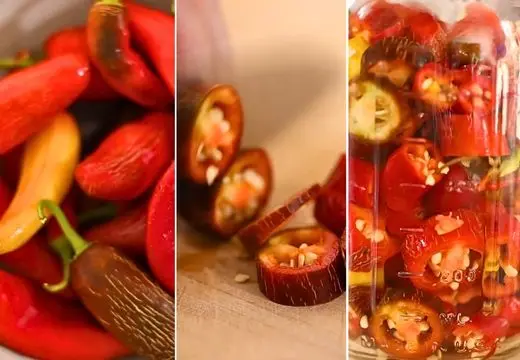
Put on kitchen gloves to protect your hands from capsaicin oils. Rinse the fresh hot peppers thoroughly under cool water to remove any dirt. Using a sharp knife, cut the peppers into large chunks. Keep the seeds for maximum heat, or remove them if you prefer a milder homemade hot sauce.
Step 2: Salt and Soak
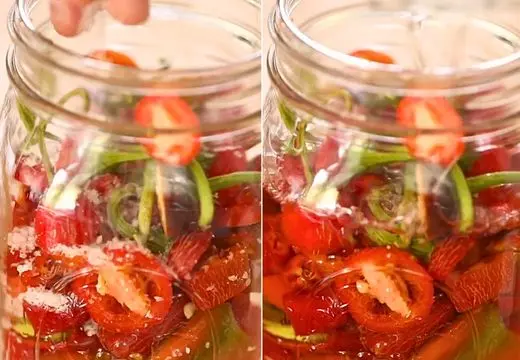
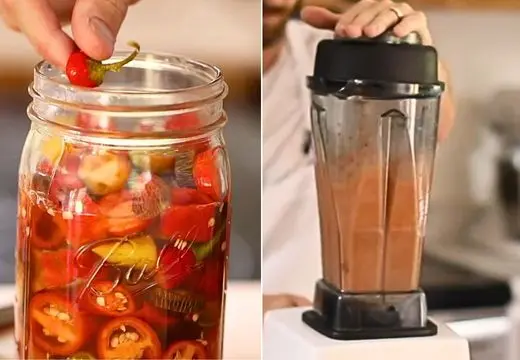
Transfer the chopped peppers to a large mason jar or bowl. Sprinkle 1-2 tablespoons of kosher salt over the peppers and toss gently to coat evenly. Pour enough distilled white vinegar to completely submerge all the pepper pieces. Cover tightly with a lid and let the mixture sit at room temperature for 1-2 hours, or refrigerate overnight for softer, more tender peppers.
Step 3: Remove Stems and Blend
After soaking, inspect the peppers and remove any remaining stem pieces for a smoother final texture. Pour the entire contents-peppers, vinegar, and any accumulated liquid-into your blender. Blend on high speed for 5-7 minutes until the mixture is completely smooth and pureed with no visible chunks remaining.
Step 4: Cook the Sauce
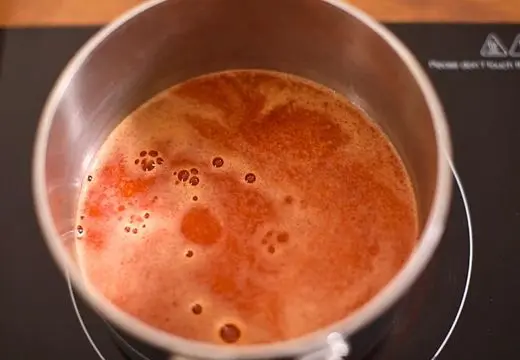
Transfer the blended pepper puree to a small pot. Bring the mixture to a rolling boil over medium-high heat, watching carefully to prevent overflow. Once boiling, reduce the heat to maintain a gentle simmer and cook for approximately 10 minutes, stirring occasionally with a wooden spoon. This cooking process concentrates the flavors and develops a deeper, more complex taste profile.
Step 5: Cool and Adjust
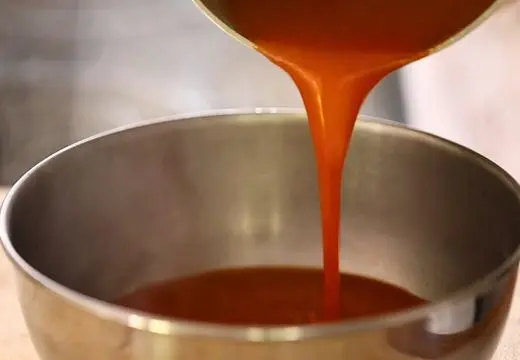
Pour the cooked hot sauce into a bowl and refrigerate for about 1 hour until completely cooled. Once chilled, taste and make final adjustments to your homemade hot sauce-add more salt for enhanced seasoning, a splash of vinegar for extra acidity, or a bit of water if you prefer a thinner consistency for easier pouring.
Step 6: Bottle and Store
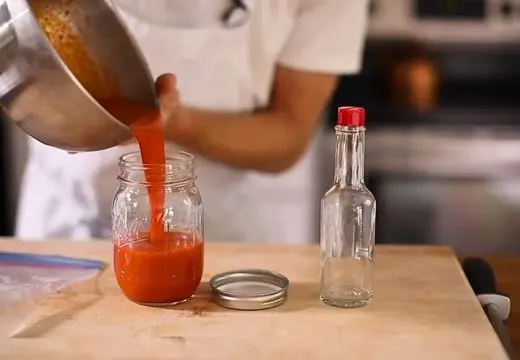
Using a funnel, carefully transfer your finished hot sauce to clean bottles or jars. Repurposed hot sauce bottles work perfectly and add a fun, authentic touch. Store in the refrigerator where it will keep for several months, maintaining its vibrant flavor and color.
Customization and Pairing Ideas for Serving
1. Fruity Tropical Twist
Add 1/2 cup of fresh mango, pineapple, or peach chunks before blending to create a sweet-heat balance. This variation pairs beautifully with grilled fish tacos, jerk chicken, or coconut rice bowls. The fruit’s natural sugars caramelize during cooking, adding complexity to your homemade hot sauce recipe.
2. Smoky Chipotle Variation
Incorporate 2-3 dried chipotle peppers (rehydrated in warm water) alongside your fresh peppers for deep, smoky undertones. This cooked hot sauce recipe works exceptionally well on barbecue pulled pork, grilled steaks, or mixed into chili and bean dishes for added depth.
3. Garlic Lover’s Version
Roast 6-8 cloves of garlic until caramelized and blend them into your pepper mixture. The mellow, sweet garlic flavor complements the heat perfectly when making hot sauce for pasta dishes, pizza drizzles, or as a marinade base for chicken wings.
4. Caribbean-Style Sauce
Add 1 tablespoon of brown sugar, 1 teaspoon of allspice, and a pinch of cinnamon before cooking. This tropical-inspired homemade hot sauce pairs wonderfully with Caribbean dishes, jerk preparations, plantains, and rice and peas.
5. Citrus-Forward Brightness
Stir in the zest and juice of 2 limes or 1 orange after cooking for a fresh, tangy dimension. This bright variation elevates ceviche, fish tacos, fresh guacamole, or grilled shrimp beautifully, adding layers of complexity beyond basic heat.
6. Asian-Fusion Style
Mix in 2 tablespoons of rice vinegar (replacing some white vinegar), 1 tablespoon soy sauce, and 1 teaspoon of sesame oil. This version of how to make your own hot sauce works brilliantly with stir-fries, ramen bowls, dumplings, and fried rice dishes.
7. Herb Garden Infusion
Blend in fresh cilantro, basil, or oregano (about 1/2 cup packed) for an herbaceous twist. This green-flecked cooked hot sauce complements Mexican street corn, grilled vegetables, breakfast eggs, or as a finishing sauce for quesadillas and burritos.

Essential Tips for Making Hot Sauce
1. Choose Your Heat Level Wisely
When making hot sauce, pepper selection determines your final spice level. Jalapeños offer mild-to-medium heat (2,500-8,000 Scoville units), serranos bring medium-high intensity (10,000-23,000), while habaneros deliver extreme fire (100,000-350,000). Mixing varieties creates a balanced, complex heat profile in your homemade hot sauce recipe. Start conservative-you can always add hotter peppers, but you can’t remove heat once it’s there.
2. Protect Yourself from Capsaicin
Always wear gloves when handling hot peppers during preparation. Capsaicin oils penetrate skin and linger for hours, causing painful burning if you touch your eyes, nose, or mouth. If you skip gloves, wash hands thoroughly with dish soap (which breaks down oils better than regular soap) immediately after handling peppers. Consider wearing safety glasses when blending to prevent splashes.
3. Control Consistency with Vinegar Ratios
The amount of vinegar affects both texture and shelf life when learning how to make your own hot sauce. More vinegar creates a thinner, pourable sauce perfect for dash bottles, while less produces a thicker condiment ideal for spooning. The acidity also acts as a natural preservative-maintain at least a 50/50 pepper-to-vinegar ratio for safe storage. For restaurant-style thin sauce, use 3 cups vinegar per pound of peppers.
4. Blend Longer for Silky Smoothness
Don’t rush the blending process in this cooked hot sauce recipe. The 5-7 minute blend time breaks down pepper cell walls completely, releasing maximum flavor while creating that coveted silky texture. A high-powered blender works best, but even standard blenders achieve smoothness with patience. For extra-smooth results, strain through a fine-mesh sieve after blending, though this reduces yield.
5. Monitor Temperature During Cooking
The simmering stage is crucial for developing depth when making hot sauce. Too high heat causes bitter, burnt flavors, while insufficient cooking leaves raw, harsh notes. Maintain a gentle bubble-you should see small, consistent bubbles breaking the surface. Stir every 2-3 minutes to prevent bottom scorching. The sauce will thicken slightly and darken as it cooks.
6. Adjust Seasoning After Cooling
Never finalize your seasoning while the homemade hot sauce is hot-heat dulls your taste perception. After the sauce cools completely in the refrigerator, flavors will have melded and settled. This is the perfect time to taste and adjust. Add salt in small pinches, extra vinegar by the tablespoon, or water by the teaspoon until you achieve your ideal balance.
7. Sanitize Bottles for Longevity
Before bottling your finished cooked hot sauce, run bottles and caps through a dishwasher cycle or boil them for 10 minutes to eliminate bacteria. Proper sanitization extends shelf life significantly-well-made, properly stored homemade hot sauce recipe batches can last 4-6 months refrigerated. Date your bottles and check monthly for any signs of mold or off-odors, though proper acidity typically prevents spoilage.
Storage and Reheating Guidance
Store your homemade hot sauce in clean, airtight bottles or jars in the refrigerator where it will maintain optimal flavor and safety for up to 6 months. The high vinegar content acts as a natural preservative. No reheating is necessary-this cooked hot sauce is meant to be enjoyed cold or at room temperature as a condiment.
Cooked Hot Sauce Recipe
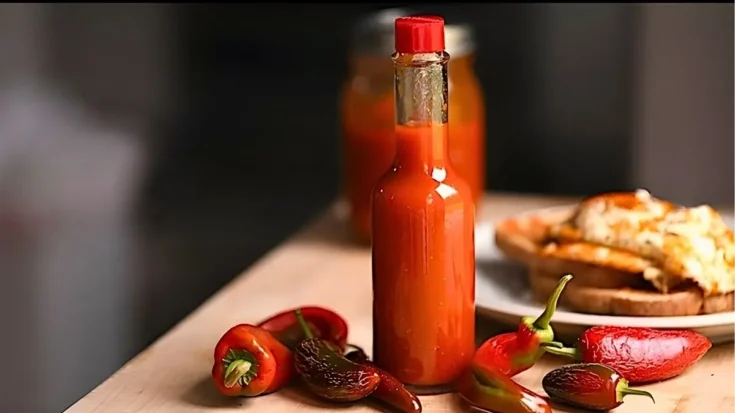
Learning how to make your own hot sauce at home turns everyday ingredients into bold flavor creations. This cooked hot sauce recipe is designed for home cooks who want consistent, restaurant-quality results without complicated steps. If you’ve ever wondered how to cooked hot sauce that tastes balanced and vibrant, this method is the perfect place to start.
Ingredients
- 1 pound (about 450g) fresh red hot peppers (such as jalapeños, serranos, and Hatch chiles, stems removed after soaking)
- 1-2 tablespoons kosher salt or sea salt (start with 1 tablespoon and adjust to taste)
- 2-3 cups plain distilled white vinegar (enough to fully cover the peppers; approximately 5% acidity)
Instructions
Step 1: Prepare the Peppers
Put on kitchen gloves to protect your hands from capsaicin oils. Rinse the fresh hot peppers thoroughly under cool water to remove any dirt. Using a sharp knife, cut the peppers into large chunks. Keep the seeds for maximum heat, or remove them if you prefer a milder homemade hot sauce.
Step 2: Salt and Soak
Transfer the chopped peppers to a large mason jar or bowl. Sprinkle 1-2 tablespoons of kosher salt over the peppers and toss gently to coat evenly. Pour enough distilled white vinegar to completely submerge all the pepper pieces. Cover tightly with a lid and let the mixture sit at room temperature for 1-2 hours, or refrigerate overnight for softer, more tender peppers.
Step 3: Remove Stems and Blend
After soaking, inspect the peppers and remove any remaining stem pieces for a smoother final texture. Pour the entire contents-peppers, vinegar, and any accumulated liquid-into your blender. Blend on high speed for 5-7 minutes until the mixture is completely smooth and pureed with no visible chunks remaining.
Step 4: Cook the Sauce
Transfer the blended pepper puree to a small pot. Bring the mixture to a rolling boil over medium-high heat, watching carefully to prevent overflow. Once boiling, reduce the heat to maintain a gentle simmer and cook for approximately 10 minutes, stirring occasionally with a wooden spoon. This cooking process concentrates the flavors and develops a deeper, more complex taste profile.
Step 5: Cool and Adjust
Pour the cooked hot sauce into a bowl and refrigerate for about 1 hour until completely cooled. Once chilled, taste and make final adjustments to your homemade hot sauce-add more salt for enhanced seasoning, a splash of vinegar for extra acidity, or a bit of water if you prefer a thinner consistency for easier pouring.
Step 6: Bottle and Store
Using a funnel, carefully transfer your finished hot sauce to clean bottles or jars. Repurposed hot sauce bottles work perfectly and add a fun, authentic touch. Store in the refrigerator where it will keep for several months, maintaining its vibrant flavor and color.
Notes
Store your homemade hot sauce in clean, airtight bottles or jars in the refrigerator where it will maintain optimal flavor and safety for up to 6 months. The high vinegar content acts as a natural preservative. No reheating is necessary-this cooked hot sauce is meant to be enjoyed cold or at room temperature as a condiment.
Nutrition Information:
Yield:
16Serving Size:
1Amount Per Serving: Calories: 60
Common Queries and FAQs
Can I use different types of peppers for this cooked hot sauce recipe?
Absolutely! Any fresh chile peppers work beautifully. Try poblanos for mild, bell peppers for no heat, Thai chiles for intense spice, or habaneros for extreme fire. Mixing varieties creates more complex flavor profiles in your homemade hot sauce.
Do I need to peel the peppers before making hot sauce?
No, pepper skins blend smoothly and contain much of the flavor and nutrients. The extended blending time breaks down skins completely. For an ultra-smooth texture, you can strain after blending, but it’s not necessary for this recipe.
How can I make my homemade hot sauce thicker or thinner?
To thicken, simmer longer to reduce liquid or add less vinegar initially. For thinner consistency, simply stir in water or additional vinegar after cooling until you reach your desired texture. Start with tablespoon additions.
Why do I need to cook the hot sauce instead of keeping it raw?
Cooking this cooked hot sauce recipe serves multiple purposes: it concentrates flavors, mellows harsh raw notes, improves texture, extends shelf life, and develops deeper complexity through caramelization. Raw sauces have their place, but cooked versions offer different benefits.
Can I freeze homemade hot sauce for longer storage?
Yes, hot sauce freezes well for up to one year. Use freezer-safe containers and leave 1-inch headspace for expansion. Thaw in the refrigerator overnight before using. The texture may slightly separate but will recombine when shaken.
What should I do if my hot sauce is too spicy?
Add more vinegar, a splash of water, or a pinch of sugar to dilute heat. You can also blend in roasted red bell peppers or carrots to mellow intensity while maintaining volume. Unfortunately, you cannot completely remove capsaicin once present.
Is it safe to can this hot sauce recipe for shelf-stable storage?
While this recipe has sufficient acidity for canning, you must follow proper USDA canning guidelines, use tested recipes, and process in a water bath canner. For safety and simplicity, refrigeration is recommended unless you’re experienced with home canning procedures.
This cooked hot sauce recipe empowers you to create exceptional homemade hot sauce that surpasses store-bought alternatives in flavor, freshness, and customization. By mastering the simple process of how to make your own hot sauce, you’ll enjoy a versatile condiment that elevates countless dishes while impressing family and friends.
The beauty of making hot sauce at home lies in complete control over heat level, flavor profile, and ingredients-no preservatives, artificial colors, or mystery ingredients. Whether you drizzle it on breakfast eggs, spice up taco night, or gift bottles to fellow heat enthusiasts, this homemade hot sauce recipe delivers consistent, delicious results every time.
We’d love to hear how this recipe turns out for you! Give it a try, then drop a comment below to share your thoughts and tips with us.